
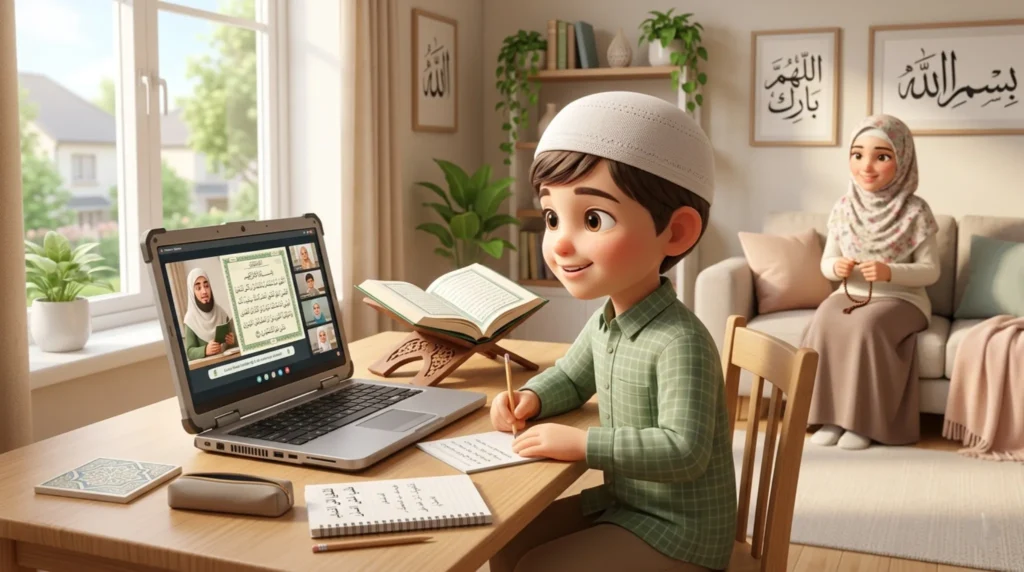
For many parents, choosing a Quran teacher used to be a much simpler decision. You’d ask someone you trusted, visit a nearby class, maybe sit in for a few minutes, and get a feel for the teacher. Now, a lot of that happens through a screen.
That shift can feel a little strange at first. And naturally, parents start with one basic question: what should we actually expect from online Quran classes for kids?
Not just convenience. Not just flexible timings. But the real things that matter teaching quality, child comfort, safety, progress, and whether the whole experience feels right.
The good news is that a strong online class can absolutely work well. In many cases, it works better than parents expect. But only when it’s structured properly and taught by someone who truly understands children.
And yes, that part matters a lot.
Why More Parents Are Choosing Online Quran Classes for Kids
A lot of families are simply trying to make life manageable. School, homework, meals, commutes, sibling schedules – the day fills up fast. By the evening, even one extra trip outside can feel like too much.
That’s one reason more parents are choosing online Quran learning for kids. It removes the travel, the waiting, the “rush and get ready” part of the day.
And honestly, that convenience isn’t small. It changes whether something becomes consistent or keeps getting postponed.
One parent once described it in a very simple way: “If the class is at home, it actually happens.” That says a lot.
There’s also the issue of access. Not every family has a qualified Quran teacher nearby, and even when they do, that teacher may not necessarily be a good fit for children. Online learning opens up more options – and often better ones.
For shy children especially, home can be a huge advantage. Some kids are quieter in unfamiliar spaces. Put them at their own desk, with their own water bottle and pencil case nearby, and suddenly they’re much more relaxed.
Small thing? Maybe. But it matters.
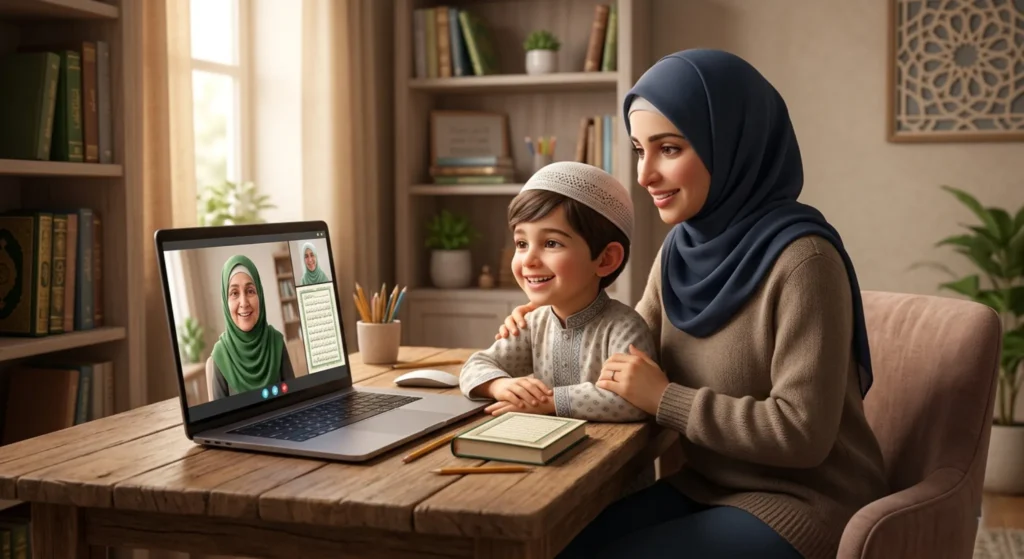
What Are Online Quran Classes for Kids?
At the most basic level, online Quran classes are live lessons taught over video. Your child joins at a scheduled time and learns directly with a teacher in real time.
That part sounds simple because it is. But a good class should feel like more than just “logging in.”
It shouldn’t feel like passive screen time. A proper lesson should be interactive. The teacher listens, corrects, asks the child to repeat, explains where needed, and adjusts when the child is confused.
Most kids Quran classes online are either one-on-one or small group sessions. For many children, especially beginners, one-on-one works better. There’s less distraction, and more room to pause without feeling self-conscious.
A typical lesson often includes:
- revision from the previous class
- new reading practice
- pronunciation correction
- short memorization or dua work
- encouragement and simple feedback
Some parents are surprised by how quickly children get used to the format. The first class may feel awkward – a little stiff, a little uncertain. Then by the third session, the child is logging in before the parent even reminds them.
That happens more often than you’d think.
What Your Child Will Usually Learn
One of the first things parents want to know is what their child will actually be learning. Fair question. A class should never feel vague or unclear.
A good Quran program usually follows a step-by-step path. It doesn’t overwhelm the child with too much too early. That’s important.
Beginner Level Learning
For children who are just starting, the focus is usually on:
- Arabic letters and sounds
- correct pronunciation
- joining letters and basic reading
- Noorani Qaida online or a similar reading foundation
This stage can look slow from the outside. Sometimes very slow. But it’s where confidence starts.
A teacher may spend several sessions just helping a child distinguish similar sounds properly. That can seem repetitive, but repetition is often exactly what young learners need.
There was a child once who kept mixing up two Arabic letters week after week. His parent was worried he “wasn’t getting it.” Then one day, it clicked – and from that point on, his reading started moving much faster.
That’s how it often goes. Quiet progress first. Then visible progress.
Intermediate and Ongoing Learning
Once the basics are in place, lessons usually move into:
- Quran reading fluency
- Tajweed for kids
- short surah memorization
- daily duas and Islamic manners
- stronger recitation confidence
Some children progress quickly. Others need more time and more revision. Both are normal.
And really, Quran learning isn’t a race. A child who learns carefully and correctly is usually building something much stronger in the long run.
What a Good Online Quran Class Should Look Like
This is where parents often start noticing the difference between “a class” and a genuinely good class.
A strong lesson should feel calm and clear. Not stiff. Not chaotic. Just… well guided.
There should be some rhythm to it. The teacher starts with revision, moves into new content, corrects where needed, then ends with something manageable to review. That kind of structure helps children feel secure because they begin to know what to expect.
A healthy class often includes:
- a clear lesson goal
- gentle revision before new material
- correction without embarrassment
- age-appropriate pacing
- enough speaking time for the child
That last part is easy to miss. Sometimes a class sounds active because the teacher is doing most of the talking. But if the child is mostly silent, they’re not really learning much.
And children notice tone very quickly. Faster than adults, honestly.
If a teacher sounds irritated, rushed, or too sharp, even a confident child may start withdrawing. On the other hand, when the teacher is steady and kind, the child often tries more – even when they’re unsure.
You can hear it. You can usually feel it in the room, even through a screen.
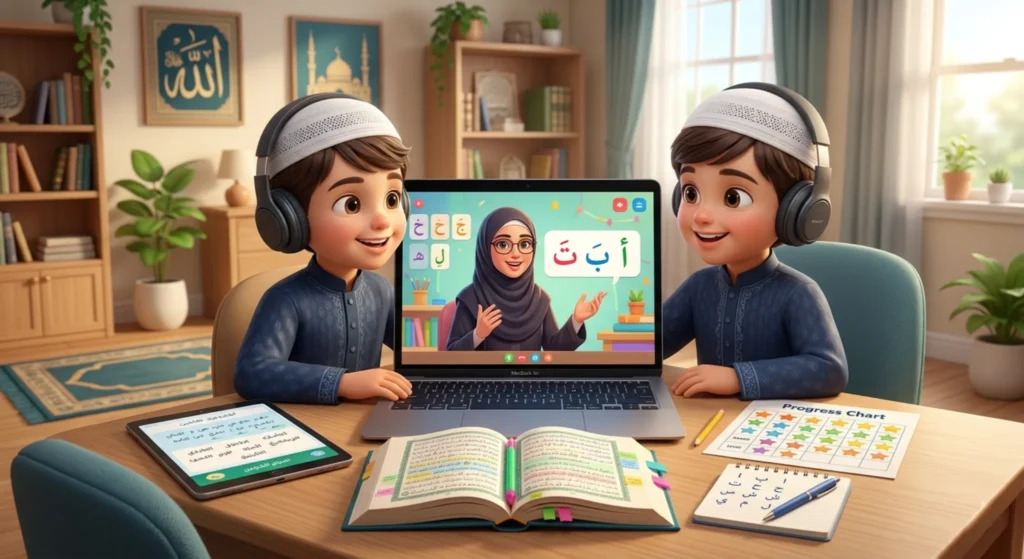
What Parents Should Expect from the Quran Teacher
For most parents, this is the biggest factor. Not the platform. Not the branding. The teacher.
Because if the teacher doesn’t connect well with your child, everything else becomes harder.
A good Quran tutor for kids should obviously know how to recite and teach correctly. But that alone isn’t enough. Teaching children requires a very different skill set.
They should be able to:
- explain clearly
- correct gently
- keep the child engaged
- notice when the child is confused
- adapt to different learning speeds
That balance matters. A lot.
A strong Quran teacher for children usually combines patience with quiet structure. They don’t let the lesson drift, but they also don’t make the child feel pressured every minute.
One parent once said, “My daughter reads better with the teacher because she doesn’t feel scared to make mistakes.” That’s a powerful sign.
Children learn more when they feel safe enough to try. It sounds obvious, but it’s often overlooked.
Some families also prefer a female Quran teacher, especially for younger children or simply for comfort and familiarity. That preference is completely valid. The key is not just choosing a teacher on paper, but choosing one your child can actually learn from.
Sometimes the “best” teacher in theory isn’t the best teacher for your child. And that’s okay.
How Online Quran Classes Keep Children Safe
Safety is one of the first things parents think about, and rightly so. It should never be treated like a side detail.
A trustworthy online learning setup should feel professional and transparent from the start. Not vague. Not confusing. Not overly informal either.
Parents should be able to understand:
- who the teacher is
- how communication works
- how lessons are scheduled
- how concerns can be raised if needed
And for younger children, it often helps if the parent stays nearby during the first few lessons. Not necessarily sitting in the frame, of course. Just close enough to hear the tone and flow of the class.
That early presence can be reassuring for everyone.
In many homes, the first few sessions happen at the dining table or in a shared family space. Later, once the child settles in, the setup becomes more relaxed. That’s a very normal progression.
You don’t need to supervise every second forever. But you do want to stay involved enough to know what’s happening.
Simple check-ins can help:
- ask your child what they learned
- listen to a short recitation now and then
- notice whether they seem comfortable before class
- ask for feedback if progress feels unclear
It doesn’t have to be complicated. Just consistent.
What Happens in a Free Trial Class?
A Free Trial is often where everything becomes clearer. Before that, most of what you have is a website, maybe a few messages, maybe some promises.
The trial is where you see what the class actually feels like.
And ideally, it should feel like a real lesson – not a sales presentation in disguise.
Usually, the teacher will:
- introduce themselves
- assess your child’s level
- listen to reading or letter recognition
- teach a short sample lesson
- suggest the next step
That one session can tell you a surprising amount.
Does the teacher know how to speak to children? Does your child seem comfortable? Does the lesson move with purpose, or does it feel scattered?
One family noticed during a trial that their son, who usually avoided reading aloud, actually smiled when the teacher praised a small improvement. It was a tiny moment. But it told them more than any brochure could.
That’s often how parents decide. Not from a grand feature list. From one or two honest signs that the learning relationship could work.
And that’s enough, usually.
How Often Should Kids Attend Online Quran Classes?
There’s no perfect universal schedule. Every child has a different routine, energy level, and attention span.
That said, for many beginners, 2 to 3 classes per week works well. It’s enough to build momentum without overwhelming them.
Some children can handle more. Others really shouldn’t.
This is one of those areas where parents sometimes overestimate what will be “ideal” and underestimate what will be sustainable. A heavy schedule may look impressive for one week, then quietly collapse by week three.
A shorter, steady rhythm often works better.
When choosing class frequency, it helps to consider:
- school timings
- homework load
- bedtime routine
- sibling schedules
- how mentally fresh your child is in the evening
And yes, some kids are simply done by 7 p.m. That’s not lack of discipline. Sometimes it’s just reality.
A child who attends fewer classes consistently will often make better progress than one who keeps missing “more ambitious” ones.
That’s worth remembering.
How Long Does It Take for a Child to Make Progress?
This is probably one of the most common parent questions. Also one of the hardest to answer neatly.
Because progress in Quran learning doesn’t always show up in big, obvious ways at first.
Sometimes progress looks like:
- fewer repeated pronunciation mistakes
- stronger confidence reading aloud
- better focus during recitation
- less resistance before class
That still counts. In fact, it counts a lot.
Longer-term progress may include:
- smoother reading fluency
- stronger Tajweed consistency
- more accurate memorization
- deeper familiarity with Quran reading patterns
How quickly a child improves usually depends on a few things:
- age
- starting level
- consistency of attendance
- teacher quality
- light review at home
Even 10 minutes of gentle practice between lessons can make a visible difference over time. Not every day has to be perfect. That’s not realistic. But a little consistency helps.
And sometimes children surprise you. They seem to be progressing slowly, then suddenly read a full line much more confidently than they did two weeks earlier.
It happens like that. Quietly, then all at once.
How to Choose the Right Online Quran Classes for Kids
This is usually the part where parents feel overwhelmed. There are a lot of options online, and many of them sound almost identical at first glance.
So how do you actually choose well?
A good starting point is to ignore polished language for a moment and focus on the real learning experience.
Ask practical questions:
- Is the class one-on-one or group-based?
- Does the teacher have experience teaching children?
- Is there a clear curriculum?
- How is progress tracked?
- Are timings flexible?
- Is there a free trial?
These questions tell you more than slogans ever will.
You should also pay attention to what feels off. That matters too.
Red Flags to Watch Out For
- no clear lesson structure
- weak communication with parents
- rushed or impatient teaching
- too little correction or too much harsh correction
- unclear expectations about progress
If something feels confusing early on, it usually stays confusing.
The right class doesn’t need to feel fancy. It just needs to feel reliable, child-appropriate, and well taught.
Sometimes parents keep searching for “the perfect program” and miss a very good one that simply feels honest and steady. That happens more than people realize.
Final Thoughts: What Parents Should Really Expect
At its best, online Quran learning should feel supportive, structured, and genuinely beneficial for a child.
Parents should expect more than just attendance. They should expect thoughtful teaching, respectful correction, visible progress over time, and a teacher who understands how children learn.
They should also expect a process. A real one.
Because Quran learning – like any meaningful learning – takes time. It takes repetition, patience, encouragement, and consistency. Sometimes it feels smooth. Sometimes it doesn’t. That’s normal too.
But when the environment is right, children often do much better than parents first imagine.
And that’s usually where confidence begins.
Frequently Asked Questions
Many children begin around ages 4 to 6, depending on their focus and readiness. Some can start earlier with very light introductory lessons, while others do better once they can sit and engage for short periods.
Yes, they can be very effective, especially when the lessons are one-on-one and taught by someone experienced with children. Beginners often do well when the pace is calm and structured.
For younger children, 20 to 30 minutes is usually enough. Older children may do well with 30 to 45 minutes depending on their concentration and lesson level.
At the beginning, it can be helpful. Many parents stay nearby for the first few sessions, then gradually step back once the child feels comfortable and the routine is established.
Watch the teacher’s tone, your child’s comfort level, the structure of the lesson, and whether the teaching feels clear and age-appropriate. Those early signs usually matter more than polished promises.
Start with a Free Trial Class
If you’re still unsure, the easiest next step is to try a Free Trial and observe the class for yourself.
You don’t need to decide everything upfront. A trial class can help you see how the teacher works, how your child responds, and whether the overall environment feels like the right fit – calmly, clearly, and without pressure.
From the finalized humanized article, create: 1. Meta title (50–60 chars) 2. Meta description (120–155 chars) 3. SEO slug 4. Internal link suggestions (5: anchor text + example URL) 5. External authoritative sources (3) for reference 6. Tags (5) + Category (1) 7. FAQ section (3–5 questions) refined for clarity and helpfulness Ensure all SEO elements feel natural, not AI-generated. Keep keywords subtly present but never forced.