

To read the Quran in its original form is a silent ambition to many non-Arab adults.. Something you think about, maybe for years. Then one day you realize-it’s time to do this properly.
Arabic reading for Quran isn’t about sounding impressive or learning to chat in Arabic. It’s about reading correctly, calmly, and with confidence. When the learning path is clear, the journey feels lighter. Still serious, yes-but manageable.
I’ve seen learners surprise themselves once confusion is removed. The right structure changes everything.
Why Arabic Reading for the Quran Is Different From General Arabic
Here’s a common situation. A learner joins a general Arabic class, memorizes greetings, learns sentence patterns… and still can’t read a single line of the Quran comfortably. Frustrating, right?
Quran-focused Arabic is different by design. It prioritizes sound, precision, and consistency. You’re training your ear and tongue as much as your eyes. Conversation can wait.
Once learners understand this difference, there’s relief. They stop feeling “behind” and start feeling aligned.
Who This Learning Roadmap Is Designed For
This roadmap is for adults who want clarity. People with jobs, families, responsibilities-and limited patience for trial and error.
Many are returning learners. They tried once, maybe twice. Life got busy. Or the method didn’t make sense. That happens more often than people admit.
If you value order, realistic pacing, and respectful instruction, this approach fits. No rushing. No guessing.
Step 1 – Building a Strong Foundation With Arabic Letters
Every serious journey starts here. Arabic letters look simple at first, but they hide complexity in sound. A letter you think you know may be produced from a completely different place in the mouth.
I’ve watched learners say, “Oh-I’ve been saying this wrong for years.” That moment matters. It resets everything.
This stage isn’t exciting, but it’s powerful. Accuracy built here stays with you.
Why Proper Letter Recognition Prevents Future Errors
When letters aren’t learned correctly, mistakes quietly follow you forward. They show up later in recitation, in Tajweed, everywhere.
Slowing down early feels uncomfortable. But later, learners often say, “I’m glad I didn’t rush this.” And they’re right.
Step 2 – Learning Arabic Reading Through Noorani Qaida
This is where reading begins to feel real. Noorani Qaida connects letters into sounds, then sounds into flow. Step by step. No shortcuts.
At first, repetition feels excessive. Then-almost suddenly-recognition replaces memorization. Learners stop guessing. They start reading.
One student once laughed and said, “My brain finally stopped fighting the letters.” That’s the shift.
Step 3 – Mastering Quran Pronunciation Before Tajweed
Before rules come comfort. Before theory comes listening.
Many adults worry about sounding slow or hesitant at this stage. That’s normal. Pronunciation is muscle training, not just knowledge. Muscles need time.
Short, focused practice works best here. Ten careful minutes beat an hour of rushed reading. Every time.
Step 4 – Introducing Tajweed Basics at the Right Stage
Tajweed can feel intimidating when introduced too early. Lots of terms. Lots of rules. Too much, too soon.
But when pronunciation is stable, Tajweed feels logical. Almost obvious. Learners start saying, “Oh, that’s why.”
The key is timing. A good teacher knows when to explain-and when to let practice do the teaching.
Step 5 – Transitioning From Practice Texts to the Mushaf
This step carries emotion. Some excitement. Some fear.
Reading directly from the Mushaf feels different. Sacred. Serious. Learners often hesitate, even when they’re ready.
Starting with short, familiar surahs helps. Confidence builds quietly, line by line. No rush. No pressure.
Why Online Arabic Quran Courses Work for Non-Arab Adults
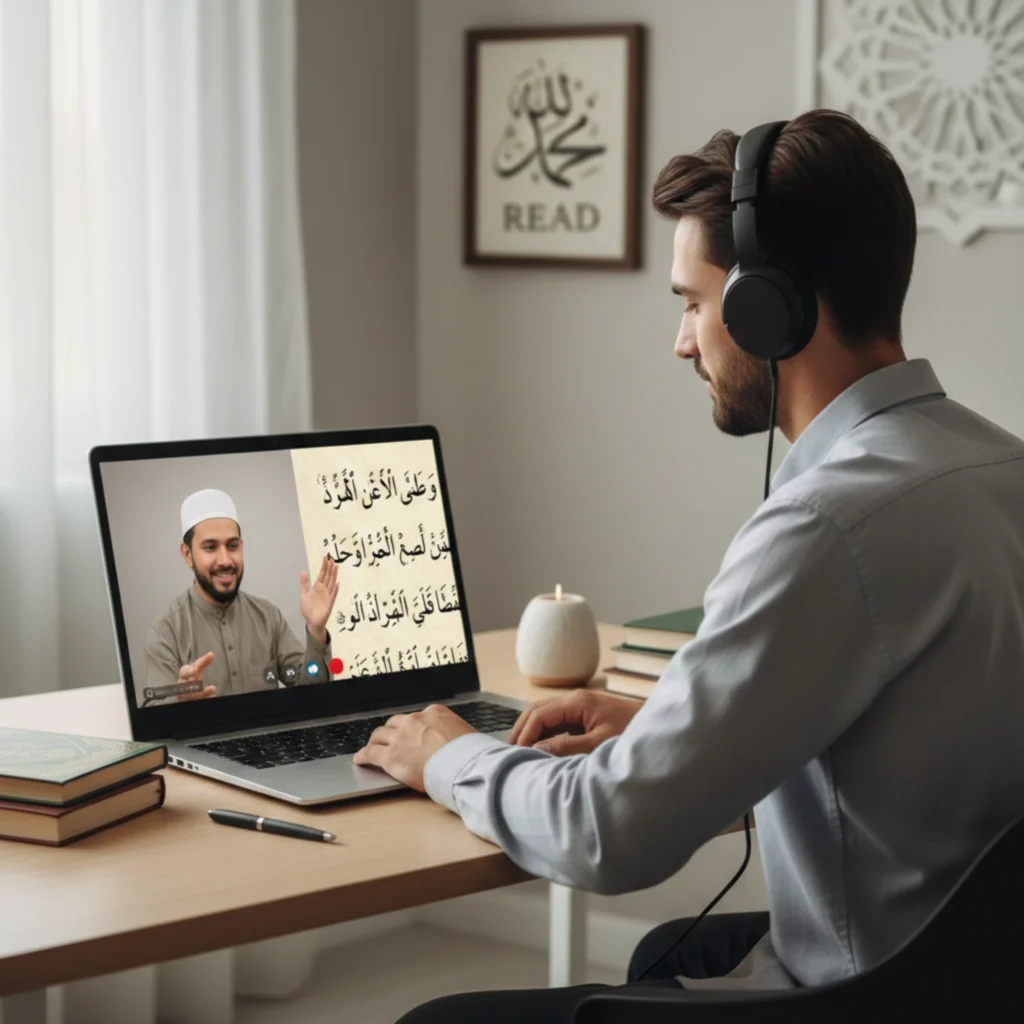
Online Quran learning isn’t a compromise anymore. For many adults, it’s a solution.
Flexible timing, one-on-one attention, focused sessions-it fits real life. I’ve seen learners make faster progress online simply because lessons adapt to them.
A well-structured Arabic Quran course online offers guidance and accountability. Two things adults need more than motivation.
Common Challenges Non-Arabs Face-and How to Overcome Them
Pronunciation anxiety shows up early. “What if I’m saying it wrong?” Most people are. That’s okay. Correction is part of the process.
Inconsistency is another hurdle. Life interrupts. The solution isn’t guilt-it’s smaller, steadier habits.
And comparison? It steals joy. Progress should be measured against yesterday, not someone else’s pace.
How Long It Takes to Read Arabic for the Quran Confidently
This question comes up every time. The honest answer? It depends.
With consistent practice and proper guidance, many adults begin reading basic Quran text within a few months. Confidence often arrives before fluency.
There’s no finish line. Just steady improvement.
Choosing the Right Arabic Reading Program for Quran
Look for teachers who understand non-Arab learners. That matters more than accents or titles.
A clear syllabus, adult-friendly pacing, and respectful correction are signs of quality. Be cautious of promises that sound too easy.
Good structure builds trust. And trust keeps learners going
FAQs
Yes. Adults often learn with more awareness and discipline than children.
For most non-Arabs, yes. It creates a stable reading base.
Even 15-20 minutes, done consistently, makes progress visible.
No. Reading skills come before grammar in Quran-focused learning.
With qualified teachers and structure, absolutely.
Parting Words: A Right Way Makes the Road Less Travelled.
Quran is not about giftedness in reading. It is about doing the right approach and being a constant.
After the learners cease to guess and begin working according to a clear roadmap confidence can and will begin to develop. Slowly, then steadily.
To start with, you do not need to be perfect.