
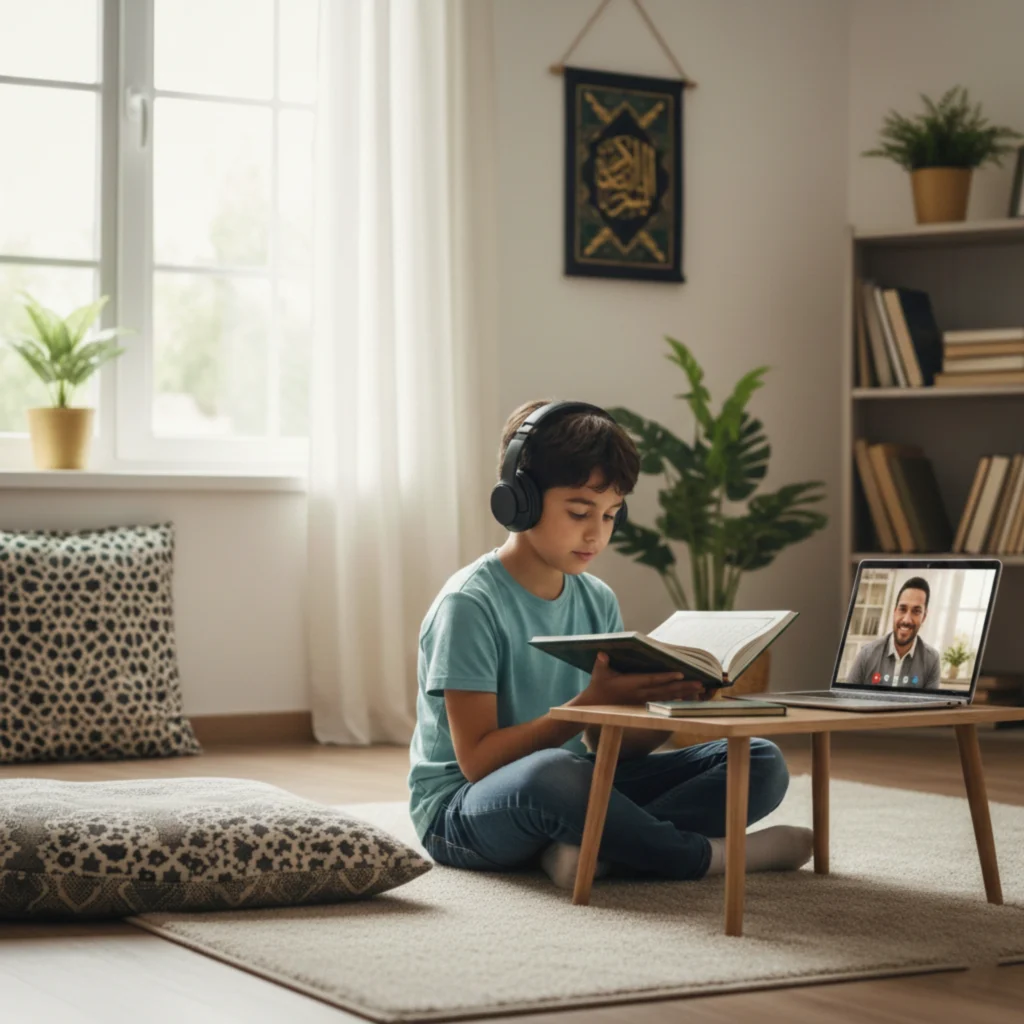
Finding a Quran teacher used to be simple. You asked a trusted community member, visited the masjid, and observed a class in person. Now it’s different. The decision happens through screens, profiles, and trial calls.
When parents ask how to choose the right online Quran tutor for your child, they’re usually carrying a quiet concern underneath: Will this person teach correctly? Will my child feel comfortable?
Those are valid questions. Important ones.
And the answer isn’t just “pick the top result online.” It takes a bit more thought than that.
Why Choosing the Right Online Quran Tutor Matters
Early Quran learning shapes habits. And habits stick.
I once worked with a student who had memorized several surahs quickly-but his pronunciation errors had never been corrected. No one slowed him down. Years later, he had to relearn basic Tajweed rules. It wasn’t impossible, but it was harder than it needed to be.
On the other hand, I’ve seen children progress slowly but steadily. Clear correction. Structured lessons. Encouragement when needed. That steady approach builds confidence.
So yes, it matters. Not just for recitation today-but for years ahead.
Define Your Child’s Learning Needs First
Before enrolling in kids Quran classes, pause. Just for a moment.
What does your child actually need right now?
Age and Attention Span
A seven-year-old does not acquire things in the same manner as a teenager. Young children require repetition, pictures, less time intervals of attention. The explanation and structured correction can be done to old students.
I recall once a parent would book 60-minute lessons that were offered to her 6-year-old child. In two weeks, the child was afraid of when to attend the class. We cut it down to 30 minutes-and immediately all was well. In some cases, less indeed is more.
Attention matters. Energy matters.
Learning Goals
Is your child starting from Qaida? Working on Tajweed? Memorizing selected surahs? Planning for Hifz?
Be specific. A general goal like “learn the Quran” isn’t enough.
Different online Quran tutors for kids specialize in different areas. Some focus heavily on memorization. Others prioritize precise recitation. If you’re clear about your target, your search becomes simpler.
And more confident.
Language Comfort
This seems small, but it isn’t.
If your child struggles to understand the tutor’s explanation, correction loses its effect. A child who feels confused often becomes quiet. Quiet doesn’t mean understanding.
Comfort builds confidence. And confidence supports progress.
Verify Tutor Qualifications and Experience
A warm personality is helpful. Qualification is essential.
Certification and Religious Training
Ask about formal study. Is the tutor a certified Hafiz? Have they studied Tajweed under recognized scholars?
There was a case where a parent chose a tutor based purely on affordability. Later, they discovered the tutor had never formally studied Tajweed. Correction had to begin from scratch.
Proper training protects your child’s learning foundation. It’s not about prestige. It’s about accuracy.
Experience Teaching Children
Teaching adults is one skill. Teaching children is another.
Children ask unexpected questions. They get distracted. They need gentle repetition. An experienced Quran teacher online understands this rhythm.
You’ll notice it during the trial session. Does the tutor correct kindly? Do they adapt when your child hesitates? Small details reveal a lot.
Tajweed Competency
Listen carefully during the session.
Does the tutor articulate clearly? Are mistakes corrected immediately? Are rules explained simply?
Tajweed is not in the disguise: it is primordial. Even minor changes in pronunciation reinforced regularly, are made as a matter of habit. And breaking vice is a long process.
Evaluate Instructional Practice and Design.
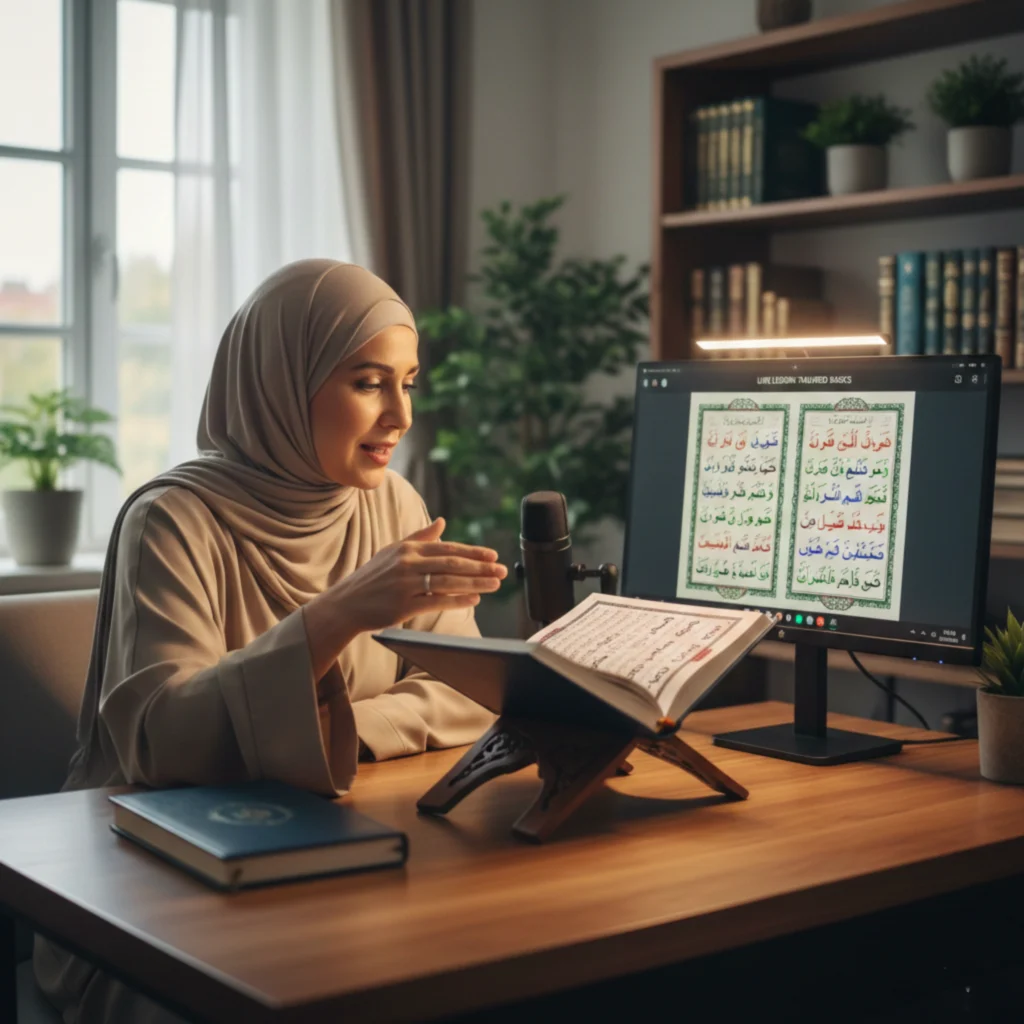
The professional online Quran classes given to children are often divided into informal video sessions by their structure.
Individual vs. Group Quran instruction.
Individual Quran teaching provides attention.. Every mistake is heard. Every correction is personal.
But some children enjoy group settings. A shy student once told me she felt “less alone” learning with two other classmates. Motivation sometimes grows through shared learning.
There isn’t one perfect format. It depends on your child.
Lesson Plan and Curriculum
Ask directly: What is the plan for the next three months?
Professional kids Quran classes should follow a clear syllabus. Random page selection leads to inconsistent progress. A structured curriculum provides measurable milestones.
If the tutor struggles to explain their teaching path clearly- pause. That’s worth noting.
Progress Tracking and Feedback
Parents shouldn’t be guessing.
Regular updates-even short ones-make a difference. I’ve seen parents feel relieved after receiving simple weekly feedback: “Memorized 5 ayahs. Tajweed improving. Needs focus on noon sakinah.”
Clarity builds trust.
Evaluate Safety and Professional Standards
Trust isn’t optional. It’s fundamental.
Background Verification
Reputable platforms screen their Quran teachers online. Ask about their verification process.
It may feel uncomfortable to ask-but it’s responsible. A serious institution won’t hesitate to answer.
Child-Safe Communication Policies
Sessions should remain professional. Communication should stay within monitored platforms.
This protects everyone. It also reassures parents (which matters more than people admit).
Technical Stability
Frequent technical disruptions break focus.
One student I worked with lost concentration every time the call dropped. Once the platform issue was resolved, improvement became steady. Consistency supports learning-it’s that simple.

Consider Flexibility and Scheduling
Modern routines are busy. School. Homework. Family commitments.
Look for flexible scheduling. Ask about makeup classes. Life happens-appointments, exams, unexpected travel.
Consistency is important, yes. But excessive rigidity can create stress. Balanced flexibility works better.
Take a Trial Class Before Committing
Never skip the trial class.
Observe quietly. Is your child engaged? Does the tutor maintain eye contact? Are corrections clear but respectful?
After the session, ask gently: “How did it feel?” You might be surprised by the honesty.
Children often sense compatibility faster than adults.
Compare Value – Not Just Price
Lower cost can be appealing. Understandably so.
But what are you actually paying for? Structured curriculum? Qualified instruction? Progress tracking? Or just scheduled video time?
The best Quran teacher online isn’t defined by price alone. It’s defined by consistency and measurable improvement.
Education, especially spiritual education, deserves careful investment.
Signs You’ve Found the Right Online Quran Tutor
You’ll notice subtle changes.
Your child prepares for class without resistance. Tajweed errors gradually reduce. Memorization becomes steady.
Communication remains open. Progress isn’t dramatic every week-but it’s visible over time.
That steady rhythm? That’s the sign.
Frequently Asked Questions
Two to three sessions work well for beginners. Memorization students may require more, depending on focus and stamina.
The priority is qualification and experience. Some families prefer a female Quran teacher for younger children, based on comfort and cultural considerations. Choose what feels appropriate for your household.
Most children respond well to 25-40 minutes. Longer sessions can reduce concentration.
Review the teaching approach. Often, small adjustments in pacing or interaction restore motivation.
Yes-when structured properly. Clear audio, direct correction, and consistency make online learning highly effective.
Final Thoughts
It is a matter of time that the correct online Quran tutor is chosen. Ask questions. Observe carefully. Trust your judgment.
As soon as the correct match is located, the improvement is natural. Confidence grows. Recitation strengthens.
You (or you and your children) are considering organized, professional children Quran classes, do a trial lesson first. Monitor the child in terms of response. Right decision is quite obvious, and it is evident, but not noisy.