
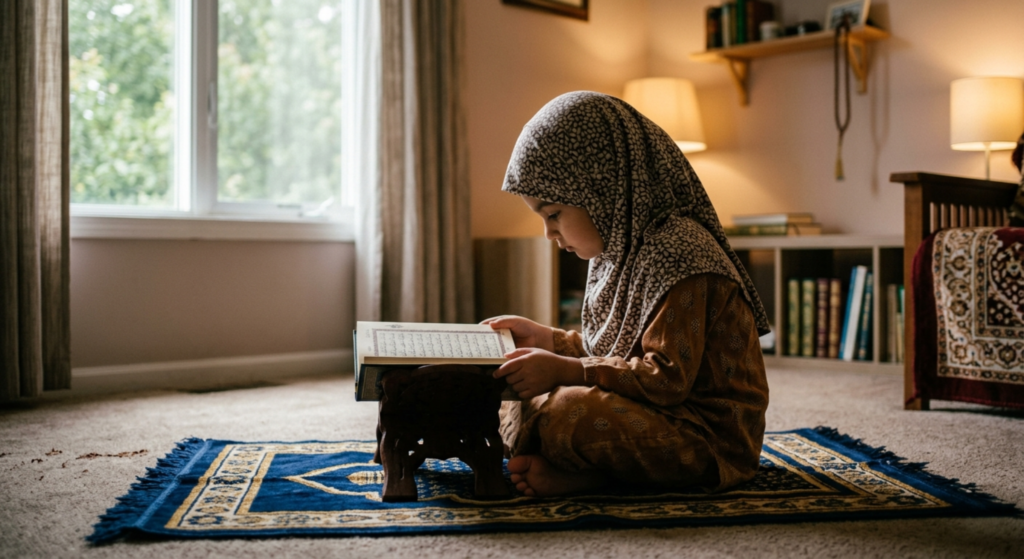
Introduction: Why More Parents Choose Online Quran Learning
Not long ago, most families followed a familiar routine-pack the kids, head to a nearby center, attend Quran class, return home. It worked. But things have changed a bit.
These days, many parents quietly explore alternatives. Schedules feel tighter. Evenings go by faster than expected. And somewhere in between school, homework, and dinner, they start thinking about better ways to manage it all. That’s where learning Quran online for kids begins to feel… practical.
A parent once mentioned how their child used to miss classes simply because of traffic. Nothing major, just everyday delays. But those missed days added up. With online lessons, that problem disappeared almost overnight. Simple shift, big impact.
What Is Online Quran Learning for Kids?
At its core, online Quran learning is quite straightforward. A child connects with a tutor through a video call, follows a structured lesson, and learns step by step.
No long commutes. No waiting rooms. Just a quiet space at home (sometimes the dining table, sometimes a bedroom corner-it varies).
How It Differs from Traditional Learning
The difference shows up quickly.
In a group setting, lessons move at one pace. Online, things adjust. If a child struggles with a verse, they pause. If they’re doing well, they move forward.
I’ve seen children who barely spoke in group classes suddenly start asking questions online. Maybe it’s the setting. Maybe it’s the one-on-one attention. Hard to say exactly-but it happens.
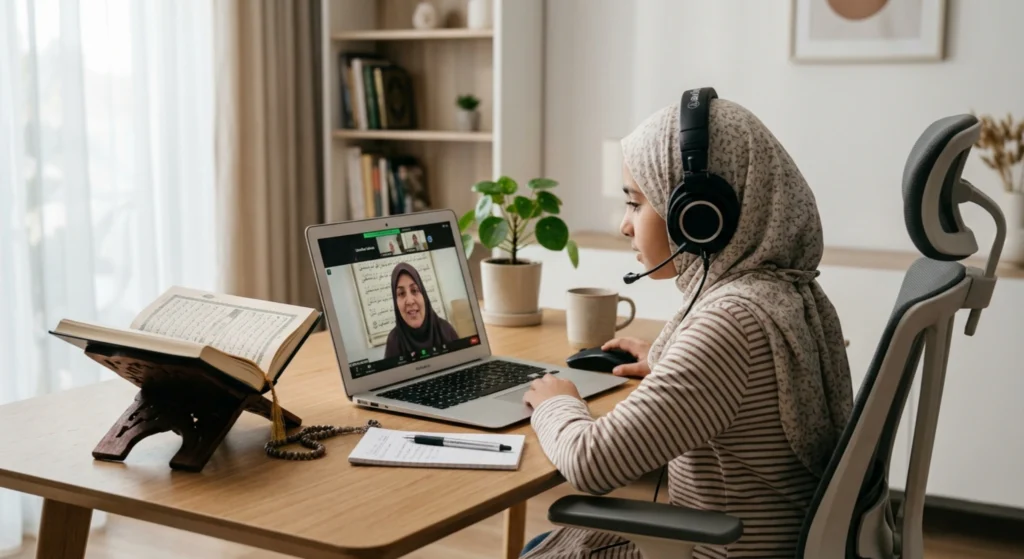
1. Flexible Learning Schedule for Busy Families
Let’s be honest-fixed schedules don’t always work anymore.
Online Quran classes for kids allow families to choose times that fit their routine. Early morning, late evening… even weekends if needed.
A mother once shared how her two children had completely different school timings. Managing physical classes was exhausting. With online lessons, she staggered their sessions. Problem solved (well, mostly).
It’s not just convenience-it’s relief.
2. Access to Qualified Quran Tutors Online
Finding a skilled teacher nearby isn’t always easy. Sometimes you settle for what’s available.
Online platforms change that. Parents can choose from experienced Quran tutors online with proper training in Tajweed and teaching methods.
I remember hearing about a family who switched tutors twice locally before trying online. The difference? Immediate. The child connected better, understood faster. Sometimes it really comes down to the right teacher.
3. Comfortable Learning Environment at Home
Children behave differently at home. You’ve probably noticed that already.
They’re more relaxed, less pressured. And oddly enough, more willing to try—even if they make mistakes.
One child I heard about used to avoid reading aloud in class. At home, though, with no one else watching, he slowly opened up. Within weeks, his confidence improved. Not dramatically. Just steadily.
And that steady progress? It matters more.
4. One-on-One Personalized Attention
In group classes, it’s easy for quieter children to blend in. Not in a good way.
With one-on-one sessions, the tutor focuses entirely on one student. Every mistake gets attention. Every improvement gets noticed.
It reminds me of how some kids nod along even when they don’t fully understand. Online, that’s harder to hide—and that’s actually helpful.
For beginners, especially, this makes Quran recitation feel less overwhelming.
5. Focus on Tajweed and Proper Pronunciation
Pronunciation isn’t something children can just “pick up” over time. It needs to be taught carefully.
Online lessons often include dedicated time for Tajweed for kids. Letters are practiced. Sounds are repeated. Again and again (yes, repetition matters here).
There was a case where a child had been reading for years—but small pronunciation errors remained. With focused correction, those improved. Not instantly, but gradually. And you could hear the difference.
6. Safe and Supervised Learning for Kids
For many parents, safety comes first. Always.
Online learning offers a level of visibility that’s reassuring. Parents can sit nearby, listen quietly, or check progress later.
Some prefer female tutors for younger children-it just feels more comfortable. Others appreciate recorded sessions. Different preferences, same goal: peace of mind.
And honestly, that peace matters more than we sometimes admit.
7. Interactive and Engaging Learning Methods
Children lose interest quickly if lessons feel too repetitive. That’s just how it is.
Online Quran classes often include small interactive elements—digital boards, screen sharing, even quick quizzes. Nothing too fancy, but enough to keep attention.
A child once described their class as “a bit like school, but easier.” Not a bad way to put it.
Engagement doesn’t need to be complicated. Just consistent.

8. Opportunity to Memorize Quran Online
Memorization takes time. There’s no shortcut.
But with regular sessions, children can memorize Quran online in a structured way. Small portions, repeated often, reviewed regularly.
One parent compared it to building a habit-like daily reading before bed. Some days are better than others. Still, over time, progress shows.
Slow, steady effort… it works.
9. Affordable and Cost-Effective Learning Option
Costs can add up quickly-transport, time, fixed fees.
Online Quran academies for children often offer flexible plans. Families can choose what suits them best.
A father once mentioned how much time he saved-not just money. And honestly, time saved often feels more valuable.
It’s not about cheap or expensive. It’s about what works long-term.
10. Global Access to Quality Islamic Education
Not every family has easy access to local resources. That’s just reality.
Online learning removes that barrier. Whether a family lives in a big city or a small town, access remains the same.
I’ve come across families living in places where finding a qualified teacher was difficult. Online classes changed that completely. Suddenly, options opened up.
And when access improves, consistency usually follows.
How to Choose the Right Online Quran Academy for Your Child
Choosing the right platform can feel overwhelming at first. So many options.
But a few simple checks help.
Key Factors to Consider
- Teacher qualifications and teaching style
- Availability of trial classes
- Feedback from other parents
- Lesson structure and approach
Sometimes, one trial class tells you everything you need to know. Sometimes it takes two. That’s okay.
Final Thoughts: Is Online Quran Learning Right for Your Child?
There’s no single “right” method for every child.
Some do well in group settings. Others need quiet, focused attention. Online Quran learning offers flexibility, comfort, and access-but whether it fits depends on your child.
Maybe try a few sessions. See how it goes. Watch how your child responds (that usually tells you more than anything else).
Small steps. Thoughtful decisions. That’s usually enough.
FAQs
Most children begin around 4–6 years old. It really depends on attention span and readiness.
Yes, especially with one-on-one sessions. Beginners often feel more comfortable learning at their own pace.
Typically 20–30 minutes works well. Long enough to learn, short enough to stay focused.
Usually, yes. Parents can sit nearby or check recordings if available.
In most structured programs, yes. It’s often a core part of the curriculum.