

Learning to recite the Quran is a deeply personal journey. Most people begin with sincerity-and a bit of uncertainty, if we’re honest. You might be reading regularly, maybe even confidently. But at some point, a quiet question shows up: am I actually reciting it correctly?
That’s often when the signs you need a Quran tutor for Tajweed start becoming clearer. Not all at once, though. More like small hints… repeated over time.
Why Tajweed Is Essential for Proper Quran Recitation
Tajweed isn’t just about sounding good. It’s about accuracy-giving each letter its right, its proper place. That’s what preserves the meaning.
I once met a learner who had been reciting for years. Smooth, confident, no hesitation. But when a teacher listened closely, a few letters were consistently off. Not obvious to others-but enough to shift meaning in certain words. That realization? It surprised him.
The Role of Tajweed in Meaning and Accuracy
Arabic is precise. Even a slight mispronunciation can change things. And most of the time, learners don’t notice it themselves (which makes sense-you hear what you’re used to hearing).
It’s a bit like accents in any language. If no one corrects you, you assume it’s fine.
Common Misconceptions About Learning Tajweed
A lot of people rely on listening-reciters, apps, recordings. And yes, that helps. But here’s the thing: listening doesn’t correct you.
You might repeat a mistake perfectly. Again and again.
(Note for expansion: Add specific examples where pronunciation changes meaning.)
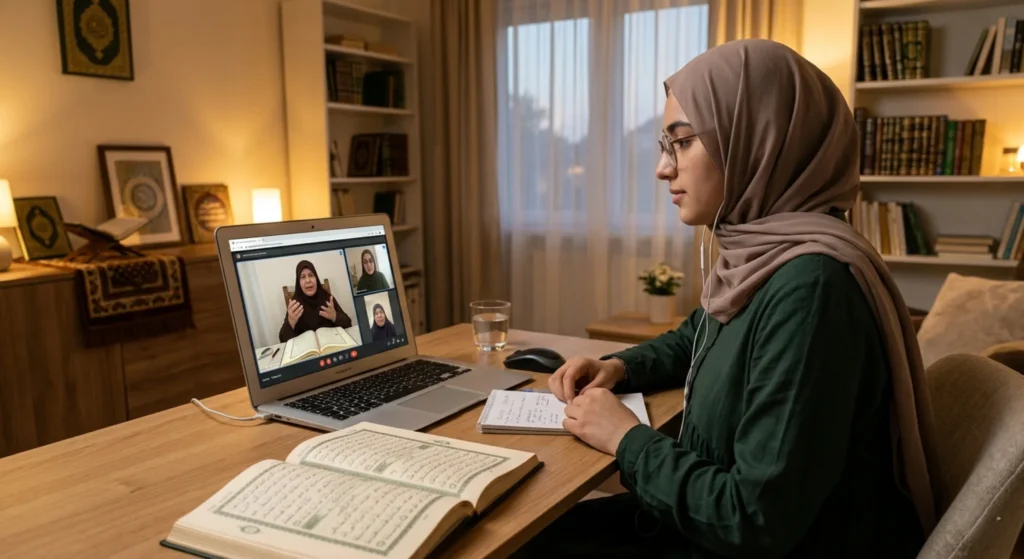
Common Tajweed Mistakes Learners Often Overlook
Some mistakes are loud. Most aren’t.
They slip in quietly-small shifts in sound, slight shortcuts in rules. You don’t notice them, especially if your recitation feels “smooth.”
- Letters not coming from the correct articulation points
- Elongation (Madd) being rushed or shortened
- Pauses happening in the wrong places
- Similar letters blending into one another
A student once said, “But I don’t hear anything wrong.” And that’s exactly the point-they couldn’t hear it yet.
(Note for expansion: Include before/after correction examples.)
Key Signs You Need a Quran Tutor for Tajweed Correction
This part requires a bit of honesty with yourself. No pressure-but just notice.
- You’re not fully sure about your pronunciation
- You learned informally, without structured guidance
- People correct you sometimes (even casually)
- You lose fluency in longer verses
- You’ve been practicing… but not really improving
There’s also that hesitation. You know the one-that tiny pause before certain words. It doesn’t always mean difficulty. Sometimes, it means uncertainty.
And if you feel stuck? That counts too.
(Note for expansion: Turn into a checklist or interactive tool.)
Can You Improve Tajweed Without a Tutor?
Short answer: yes. But also-not completely.
Benefits of Self-Learning Tajweed
Self-learning gives you flexibility. You can go at your own pace, repeat lessons, revisit rules. Many people start this way (and it’s a good start).
One learner I spoke to used apps daily for months. Built consistency, which is great. But still felt unsure.
Limitations of Learning Alone
Because here’s the catch-you can’t correct what you don’t notice.
Tajweed isn’t just knowledge. It’s sound, movement, subtle control. Without feedback, mistakes settle in. Quietly.
Would you learn pronunciation in a new language without ever being corrected? Probably not.
(Note for expansion: Add comparison table for clarity.)
How a Quran Tutor Helps You Improve Faster
A good tutor does more than explain rules. They listen-really listen.
They’ll catch things you didn’t even know were off. And they’ll correct them in real time, gently, step by step.
- Immediate feedback (this alone changes everything)
- Clear breakdown of rules
- Practical application, not just theory
- A sense of accountability-someone’s actually guiding you
I’ve seen learners improve in weeks after months of feeling stuck. Not because they weren’t trying before… but because now, they had direction.
(Note for expansion: Add a short success story.)
Online Quran Tutor vs Traditional Learning
Learning today looks different. More flexible.
Online Quran classes make it easier to stay consistent. You can schedule around your day, learn from anywhere, and get one-on-one attention.
Traditional group settings have their strengths too-structure, routine. But individual correction? That can be limited.
For parents, online options remove a lot of logistical stress. For adults… well, it makes starting feel less intimidating.
(Note for expansion: Add scenarios for different learners.)

Quick Self-Assessment: Do You Need Tajweed Help?
Take a moment and ask yourself:
- Do you hesitate during recitation?
- Are you unsure where certain letters come from?
- Do you rely more on imitation than understanding?
- Have the same mistakes been showing up for a while?
If you’re nodding to a couple of these… that’s worth paying attention to.
Not a problem. Just a signal.
(Note for expansion: Turn into quiz-style format.)
Take the First Step to Improve Your Quran Recitation
Improving Tajweed doesn’t mean starting over. It means refining what’s already there.
And once corrections begin, something shifts. Recitation feels lighter. More natural. Less forced.
One learner described it simply:
“It finally felt… right.”
Start Your Tajweed Trial Today
If you’re thinking about improving, you don’t have to commit to anything big right away.
A short trial session can give you clarity-where you stand, what needs work, what comes next.
No pressure. Just a starting point.
FAQs
If you’re unsure or often corrected, that’s a strong sign. Recording yourself can help-but feedback from a trained ear makes a real difference.
Yes, absolutely. In fact, many adults progress quickly once they get structured guidance.
It depends. Some corrections happen quickly, others take time. Consistency matters more than speed.
They can be very effective-especially with one-on-one attention and regular sessions.
Yes. It ensures the Quran is recited as it was intended, with accuracy and care.